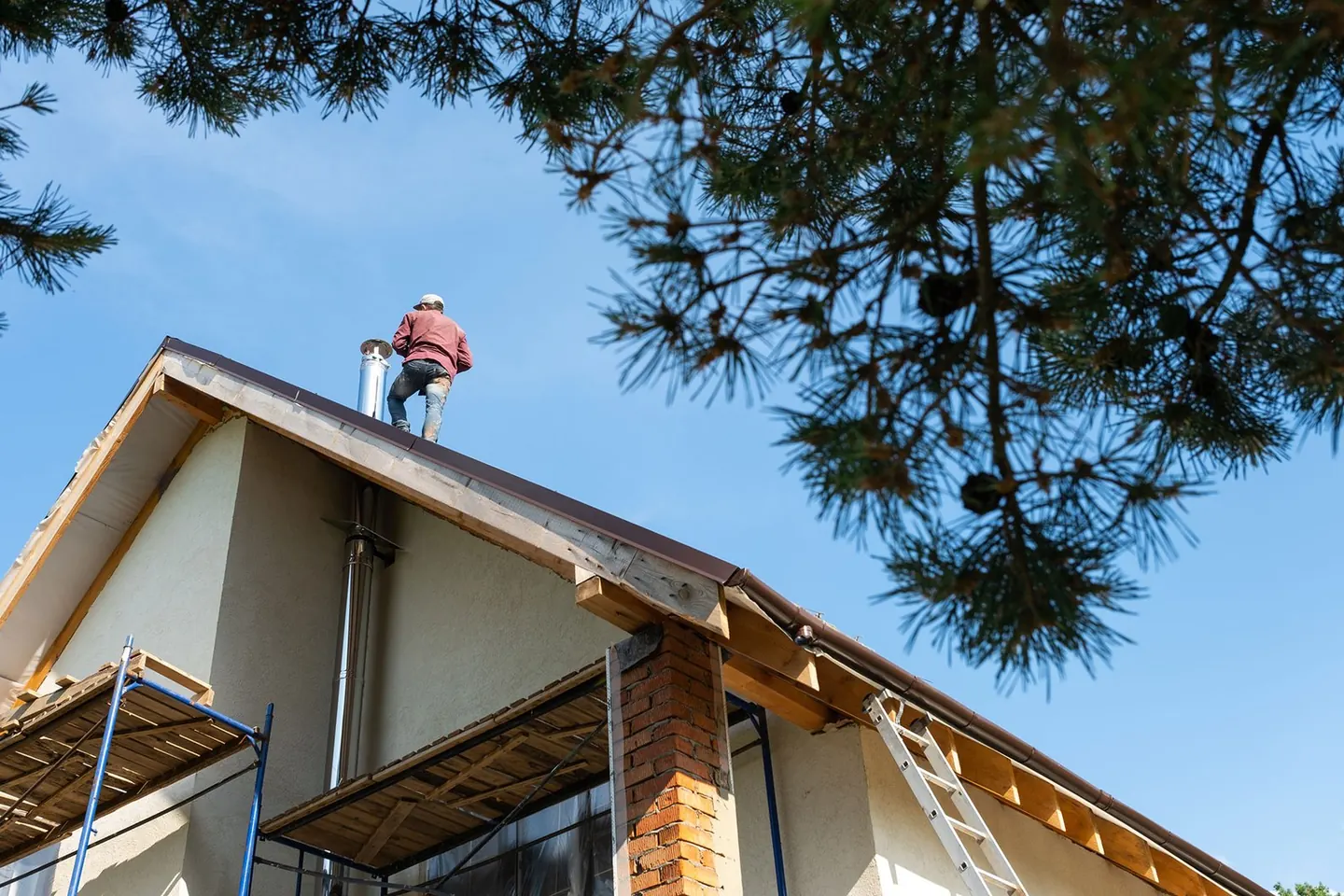
Emergency roof replacement deals with roofs that have been opened up suddenly, by a storm, a falling branch, a failed section of sheeting or another event, and need urgent attention. For homes in metropolitan Adelaide and the Adelaide Hills, the first step is always a make-safe: covering or securing the damaged area to stop more water getting in. After that, the roof is inspected properly and a free quote is given for the permanent repair or replacement. The work is done by independent local roofing contractors, and how fast someone can reach you depends on weather and demand at the time.
What to do in the first hour
Your own safety comes first. Keep people out of rooms where the ceiling is bulging or wet, because saturated plasterboard can drop without warning. If water is near light fittings or power points, turn off power at the switchboard if you can do it safely. Move furniture and valuables, put buckets and towels under drips, and take photos of the damage inside and out from the ground. Do not climb onto a wet or broken roof.
Make-safe work explained
A make-safe is temporary. Depending on the damage, it may be a heavy tarp tied and weighted over the opening, temporary sheeting screwed in place, loose sheets re-fixed, or broken tiles swapped for spares. The goal is to stop the water and stop further movement, not to restore the roof. Make-safe work should be itemised separately, because insurers often treat it differently from the permanent fix. If the roof has asbestos cement sheeting, the crew should treat it with care and not break it further; SafeWork SA sets out when a licensed removalist is required, so check with them.
Why Adelaide roofs fail suddenly
Most sudden damage here comes from severe thunderstorms, which can bring hail, intense rain in a short time and damaging gusts. Wind gets under loose ridge capping, lifts sheets with tired fixings and drops branches, particularly in the Hills and in older areas with large trees. Roofs already weakened by rust, cracked tiles or perished pointing are the most likely to give way. Heavy winter rain, mostly between about May and September, finds gaps that went unnoticed through summer. The guide to the dangers of delaying roof replacement explains how small faults turn into emergencies.
From temporary fix to permanent roof
Once the roof is dry and safe to access, a contractor inspects the whole cover, not just the damaged patch. Sometimes a local repair is enough; see roof repairs. If the damage is widespread, or the roof was already near the end of its life, a full re-roof may be the better answer. Any sagging or frame damage needs assessing first, and our page on what a sagging roof means is worth a read.
If you are claiming on insurance
Contact your insurer early, keep all invoices and photos, and ask before permanent work starts. Your insurer and its assessor make the call on cover. Our insurance roof replacement page explains how a contractor's report fits in.
Cost and who you are dealing with
Make-safe charges depend on the size of the opening, access, height and materials used. The permanent work is priced like any other roof job, and the Adelaide cost guide explains the factors. We ask the contractors we work with to hold the licences and insurance the job needs; ask to see them and check the CBS public register before permanent work starts.
Once the crisis has passed, it is worth asking the contractor what made the roof vulnerable in the first place. Loose capping, tired fixings or overhanging branches are often easy to deal with as part of the permanent job, and fixing them lowers the odds of another urgent call next storm season.