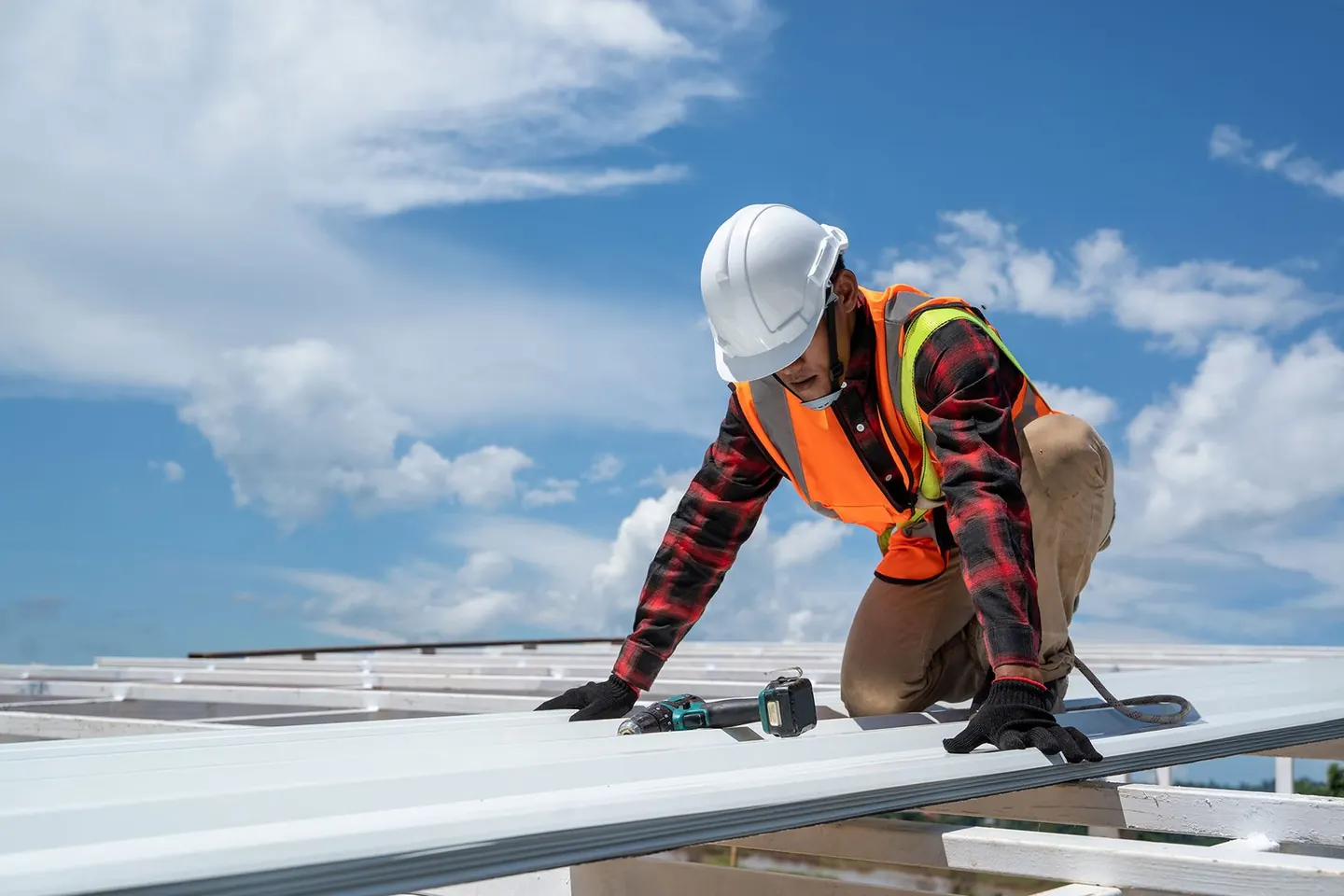
Metal roof replacement takes off old corrugated iron, galvanised sheet or worn steel roofing and fits new sheets, fixings, capping and flashings. It is aimed at owners across metropolitan Adelaide and the Adelaide Hills whose metal roof is rusting through, lifting at the screws or leaking at the laps. The roofing itself is done by independent local roofing contractors that Roof Replacements Adelaide refers you to, and you get a free quote after the roof has been inspected.
What failing metal roofing looks like
Metal roofs rarely fail all at once. The usual pattern starts with rust along the bottom edge of sheets and around old nail or screw holes, then spreads under the laps where moisture sits. Fixings loosen as timber battens shrink and the sheet expands and contracts with daily heat. Look for brown streaks on the underside of eaves, pinholes letting light into the roof space, sheets that rattle in wind, and corroded gutters. When rust has gone right through in many places, patching sheets one at a time becomes a losing game, and our page on the dangers of delaying replacement explains why waiting tends to cost more.
The job, from strip to finish
Old sheets are unscrewed or pulled off in runs, so only part of the roof is open at any time. Battens are inspected and either refixed, replaced or supplemented, and on older timber-framed roofs steel battens are a common upgrade. An insulation blanket or sarking is rolled out if it has been agreed. New sheets are laid from one end, lapped against the prevailing weather and screwed to the manufacturer's pattern. Ridge capping, barge flashings and apron flashings at walls follow, then gutters and downpipes if they are part of the job.
Local conditions that affect metal roofs
Adelaide summers bring long stretches of heat and strong UV, which put stress on coatings and fixings through constant expansion. Most rain falls in winter, roughly May to September, when slow leaks at laps start to show. Severe thunderstorms can bring hail and damaging gusts, and loose sheets are often the first thing to go. Salt air near the gulf coast and the western suburbs speeds up corrosion, so the steel coating and screws should suit that exposure. Many older villas and bungalows still carry their original corrugated iron, often over timber battens that have moved over time. In the Hills, bushfire overlays may affect how gaps are sealed against embers; ask the contractor and check with council.
Choices you will make
The first is finish: plain metallic-coated steel such as Zincalume, or a pre-painted product such as Colorbond in a colour that suits the house and street. Our guide to Zincalume vs Colorbond compares them. Next is the sheet profile, with classic corrugated suiting older homes and wider-rib profiles common on modern ones. Last is what goes underneath; a blanket helps with heat and noise, as covered in roof insulation during replacement.
How quotes are priced
A metal roof quote is built from roof area, pitch and complexity, the sheet and coating chosen, batten work, insulation, flashings, gutters, access and waste. Solar panels add removal and refit by an electrician. Because these items vary so much between houses, read the Adelaide roof replacement cost guide for how each one affects the price, then compare quotes on scope rather than the bottom line alone.
Checking the contractor
We ask the contractors we work with to hold the licences and insurance the job needs. Ask to see them before work starts, and look the licence up on the Consumer and Business Services (CBS) public register. For older homes, check whether any fibro sheeting is nearby before cutting starts.
It also helps to agree where sheets will be stacked when they arrive. Long lengths of steel need flat, clear ground near the house, and a quick word with neighbours about deliveries and bin placement avoids friction on a narrow street.