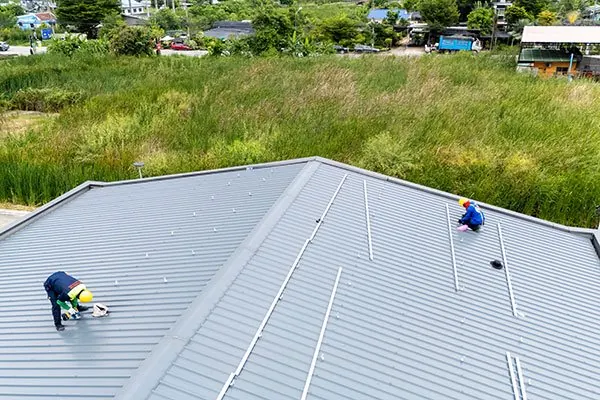
Commercial roofing covers roof replacement and major repairs on non-residential buildings: warehouses and factories, shops and showrooms, offices, sheds on rural blocks and strata-titled apartment or unit buildings. Across metropolitan Adelaide and the Adelaide Hills, owners, property managers and strata corporations can arrange a free site inspection and written quote. The work itself is carried out by independent local roofing contractors with experience on larger roofs, and most jobs are planned so that tenants and staff can keep using the building.
What is different about larger roofs
A commercial roof is usually a big area of steel sheeting at a low pitch, often with box gutters, skylights, exhaust fans and air-conditioning plant on top. Low slopes drain slowly, so laps, end fixings and gutter joins matter more than on a steep house roof. Internal box gutters that overflow in heavy winter rain cause a large share of leaks. Old translucent roof sheets go brittle in Adelaide sun and become a real fall hazard. All of this means the scope needs to be worked out carefully before any figures are put down.
Working around tenants and operations
Most businesses cannot simply close while the roof is replaced. A contractor will usually propose replacing the roof in bays or sections, so each area is only open for a short time and is closed up at the end of every shift. Noisy strip-off or crane lifts may be scheduled outside trading hours. Stock and equipment under the work area may need covering or moving. Clear notices for staff and visitors about access and parking help the job run smoothly.
Safety at height
Work health and safety rules apply to all roof work, and large roofs add complexity: long edges, fragile roof lights, and plant to work around. Expect the plan to include edge protection or scaffold, safety mesh under new sheets where needed, anchor points, and controlled access. Ask to see the safe work method statement for the job. Permanent anchors or walkways can be added so future inspections are easier.
Strata buildings
For apartment and unit blocks, the roof is usually common property, so the strata corporation must approve the work and how it is paid for. Owners should expect a committee or manager to gather quotes and present them. Ask that quotes be set out line by line so they can be compared fairly, and allow time in the planning for approval at a meeting. Our guide to questions to ask a roof replacement contractor works well as a checklist.
Asbestos, solar and approvals
Many older industrial buildings have asbestos cement roofing. The building's asbestos register should guide planning, and SafeWork SA sets out when a licensed removalist is required, so check with them. Solar arrays are common on commercial roofs and need removal and reinstatement by an electrician. Changes to roof form or structure may need development approval through PlanSA, so check with your council before work starts. Staging, cranage and waste may also need traffic management.
How commercial jobs are priced
The figure depends on roof area and pitch, access and cranage, the staging needed to keep the building operating, height safety, skylight and gutter work, asbestos, and plant or solar on the roof. The Adelaide roof replacement cost guide explains these factors. We ask the contractors we work with to hold the licences and insurance the job needs; ask to see them and check the licence on the CBS public register. For the house side of things, see re-roofing or metal roof replacement.
For owners with several buildings or a long lease portfolio, a condition report on each roof can help plan replacement over a few budgets instead of facing several failures at once. Ask the contractor to rate each section and flag the items that cannot wait.